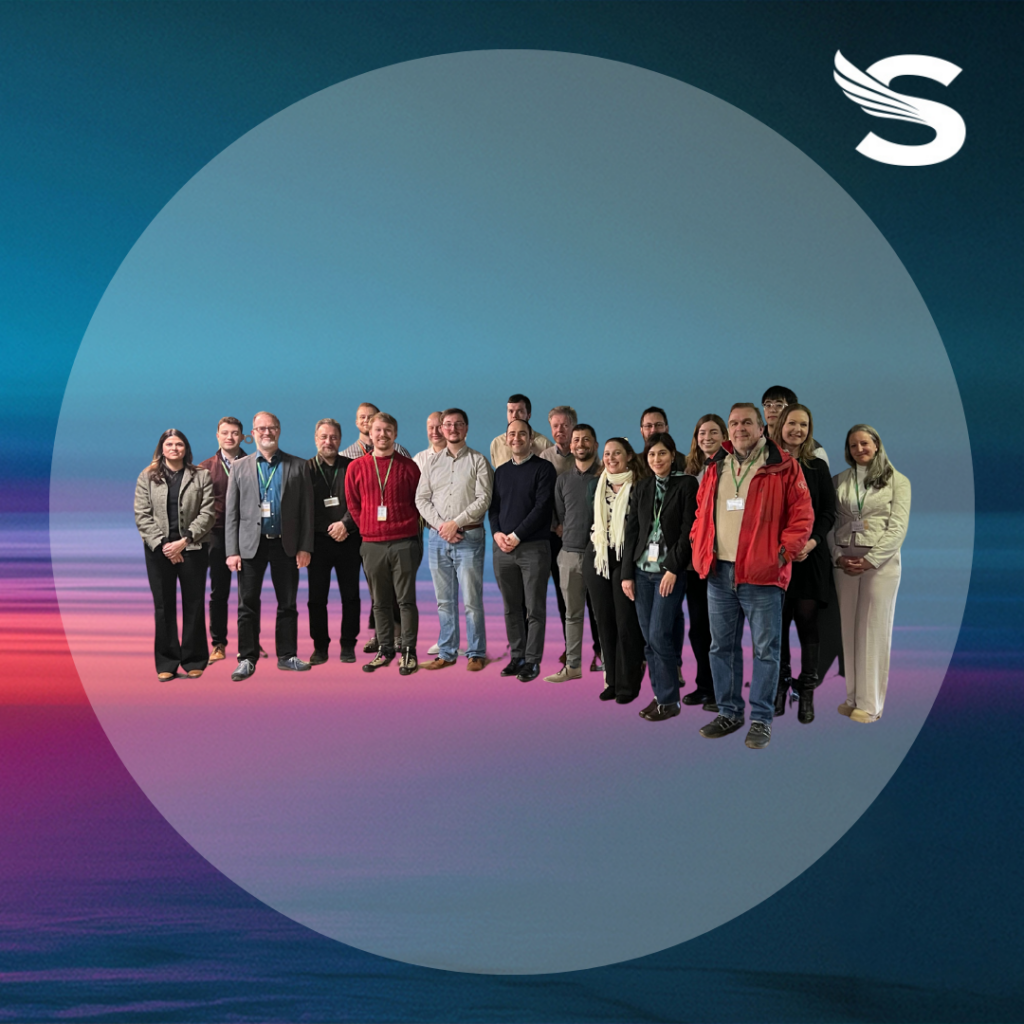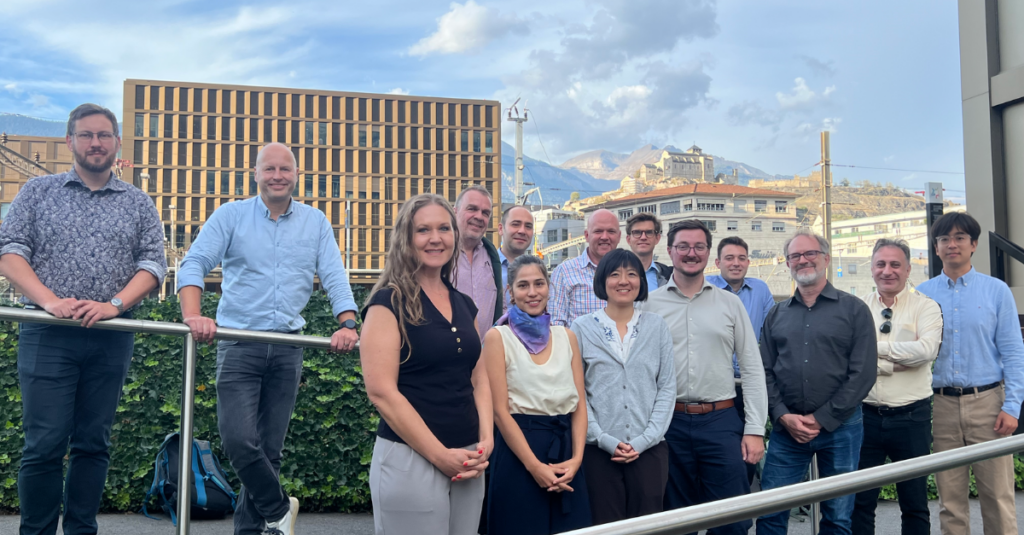
The SAFphyre consortium met in Sion, Switzerland, for its General Assembly, hosted by EPFL, to review progress across all work packages and shape the project’s impact and exploitation plan.
At the beginning of October, the SAFphyre consortium met in Sion, Switzerland, for its General Assembly. EPFL hosted the two-day meeting.
Representatives of all seven partners attended: TNO, Topsoe, Sasol, CEA, EPFL, Aarhus University, and Linq Consulting & Management. Ten months after the start of the project, it was a chance to take stock and agree on the way forward. The General Assembly brings together the partners who each hold a different part of the work, from the cells themselves to the final assessment of the process, so decisions made in one area can be checked against all the others.
Progress across every work package
The partners reviewed progress in all work packages. The topics ranged from cell optimisation and durability modelling to system integration, large-scale assessment and stakeholder engagement.
Together these cover the whole route the project is building. CEA leads the work on cell optimisation and on durability modelling and validation. Topsoe leads the integration of the system and its demonstration. EPFL leads use-case mapping, process simulation and the techno-economic and environmental assessments, including the large-scale analysis. Linq leads dissemination and stakeholder engagement, and TNO coordinates the project as a whole. The aim is to improve co-electrolysis cells, test them over more than 3,000 hours, and then run an integrated 25 kWe demonstrator, coupled to a Fischer-Tropsch reactor, for more than 4,000 hours.
A look inside the lab
The programme included a lab tour at EPFL. It gave partners a first-hand view of the work behind the project’s models and assessments.
Planning how results reach their audience
The partners also took part in a workshop on the project’s first impact and exploitation plan. A plan of this kind sets out who the project’s results are for and how they will reach them. In the case of SAFphyre, that means the people best placed to use them: from industry and policymakers to the wider research community.
This matters because the project is designed to do more than produce results. Among its objectives are to show how the cost of sustainable aviation fuel can come down through scale-up, to support new markets for e-fuels through detailed simulation models, and to assess the environmental performance of the whole route through a life cycle assessment. The project will also assess more than 30 process configurations and use cases. A clear route from results to users is what turns those findings into something the sector can act on.
The project at ten months
SAFphyre began in January 2026, and the partners first met in person at the kick-off meeting hosted by TNO in Petten on 2–3 February. The project runs for 48 months, until the end of 2029. Sion was an opportunity to look back at the first ten months and to align on what the next phase requires.
Ahead
The consortium leaves Sion with a shared plan for the next phase of the project. We will report on progress in our newsletter and on our social channels, where you can follow SAFphyre on LinkedIn, X, Instagram and Facebook. Project news and public documents are published on the project website, safphyre-project.com.
Thank you to EPFL for hosting, and to every partner for two productive days.